Sleep and Physical Activity for Children in West Bengal
IAP sleep hours by age, safe infant sleep, screen limits, and how Bengal children can play enough each day.

Late nights in front of a phone, a child who will not settle unless the TV is on, and a morning that starts already tired — this is common in many Indian homes. The Indian Academy of Pediatrics (IAP) parent guideline on sleep and physical activity explains how much rest and movement children need, and how families can set a safer night routine.
Facts in this note follow the IAP parent guideline. The full set is listed on the IAP guidelines for parents page. For food that helps sleep and growth, see healthy eating and junk food for children in West Bengal.
Why sleep matters
Sleep is not empty time. IAP describes it as an active process. The body restores itself, grows, and the brain settles mood and daytime function. There are two stages — REM and non-REM — that cycle through the night, with longer REM towards morning.
How much sleep by age
IAP shares these usual ranges (Sleep Foundation / AAP figures in their table):
- 0–3 months: 14–17 hours, about 3 naps - 4–11 months: 12–15 hours, about 2 naps - 1–2 years: 11–14 hours, about 1 nap - 3–5 years: 10–13 hours - 6–13 years: 9–11 hours - 14–17 years: 8–10 hoursToo little sleep can mean daytime sleepiness, irritability, behaviour problems, weaker school work, and in older youth a higher chance of road accidents.
A bedtime that works in a Bengal home
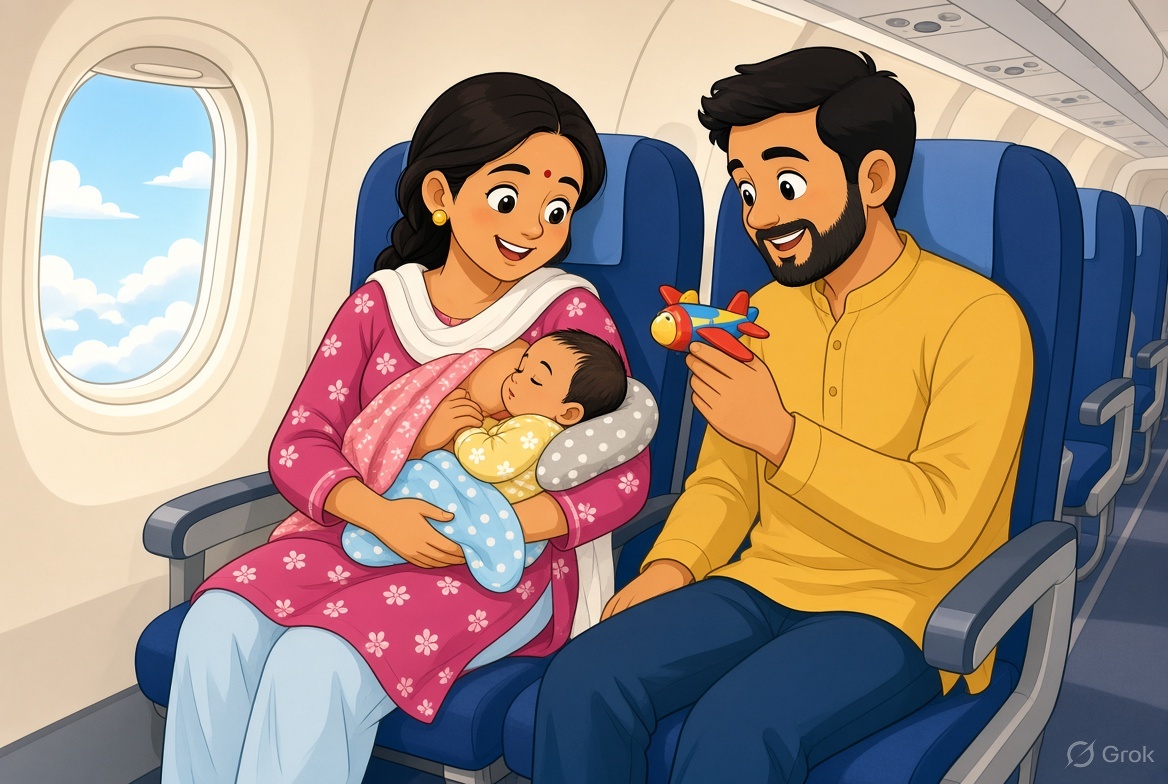
- Keep the same sleep time every night. In holidays, shift by no more than one hour. - A quiet, dim, comfortable corner is better than a bed facing a TV or phone. - Stop screens one hour before sleep. - A short story, a warm bath, and warm milk beat chocolate, tea, or sugary drinks at night. - For babies 0–6 months, you may hold them till they sleep, or place them drowsy in the cot with a gentle voice. - From 6 months to 2 years, IAP describes controlled comforting: put the child down before they are fully asleep, step out, return after 2–4 minutes if they cry, pat or talk without picking up, and leave again once they are quiet.Safe sleep for infants
IAP uses the term sudden unexplained death in infancy (SUDI) for an unexpected infant death with no clear cause. Safer habits they list:
- Put healthy babies on their back to sleep. If they roll later in the night, let them find their own position. - Breastfeeding cuts SUDI risk by more than half, but safe-sleep rules still apply for every baby. - Share the room, not the bed, for the first 6–12 months.
- Use a firm cot surface, tight sheet, no soft pillows or stuffed toys. - Swaddling is fine if the head and face stay uncovered. - Do not smoke near the baby. Second-hand smoke is linked to SUDI even when adults smoke in another room.
When the child will not stay in bed
Sleep-onset association: the child only falls asleep if a parent or the TV is there, then wakes again wanting the same thing. IAP suggests a checking method (leave 1–2 minutes, return, slowly lengthen the gap) or camping out (sit by the bed, then move the chair farther over 7–10 nights).
Limit-setting: the child keeps coming out for water, the toilet, or one more talk. Limit early-night requests to one or two. A “bedtime pass” — one allowed trip, then stay in the room — can help.
Night terrors, sleepwalking, talking in sleep
Nightmares are bad dreams later in the night; the child wakes and may remember them. Avoid horror films. A night light and calm talk help.
Sleepwalking happens in deep sleep early in the night. The child may look awake but is not. Close doors and keep stairs safe.
Night terrors often start 2–3 hours after falling asleep. They look dramatic, but the child usually does not remember and settles in a few minutes. Most children outgrow these parasomnias. See a doctor if episodes are frequent, violent, or the child is exhausted by day.
Sitting time versus play
Sedentary time is sitting or lying down while awake. Reading and puzzles are useful sitting. Long phone or TV time is not.
- Under 2 years: no electronic media - 2–5 years: TV or tablet under 1 hour a day - Under 5 years: do not leave the child sitting still for more than 1 hour unless asleep - 5–17 years: keep entertainment screens to a maximum of 2 hours a day and break long sittingHow much activity
IAP says all movement counts, in a safe place.
- Birth to 1 year: at least 30 minutes of supervised tummy time when awake — reaching, grasping, rolling, crawling - 1–2 years: at least 3 hours of activity spread through the day - 3–5 years: at least 3 hours, including 60 minutes of moderate-to-vigorous playA Maidan cricket knock, running in a housing-society courtyard, climbing stairs, and dancing to a Tagore song at home all count.

Activity helps heart, lungs, bones, weight, mood, sleep, and school focus. Children with autism, cerebral palsy, or diabetes still need movement planned with their doctor.
When to get medical help
Loud snoring every night, pauses in breathing, very late sleep that never improves, or a baby who is unusually floppy or hard to wake needs a paediatrician. Go to hospital for a seizure, a head injury after a fall from the bed, or a baby who will not rouse.