Travelling with Children in India: IAP Tips for Trains, Cars and Flights
IAP travel guide for Indian parents: packing, breastfeeding on a flight, car seats, train food, motion sickness and when to stop the trip.
A family ticket looks simple on a screen. The real journey is nappies in a small bag, a hungry baby at take-off, and a toddler who has found the only open water bucket on the platform. The Indian Academy of Pediatrics (IAP) travel guideline is not a holiday brochure. It is a parent’s list: what to pack, what to skip, how to keep a baby fed, and when the trip should wait.
This longer note follows that IAP parent chapter. The official set is on the IAP guidelines for parents page.
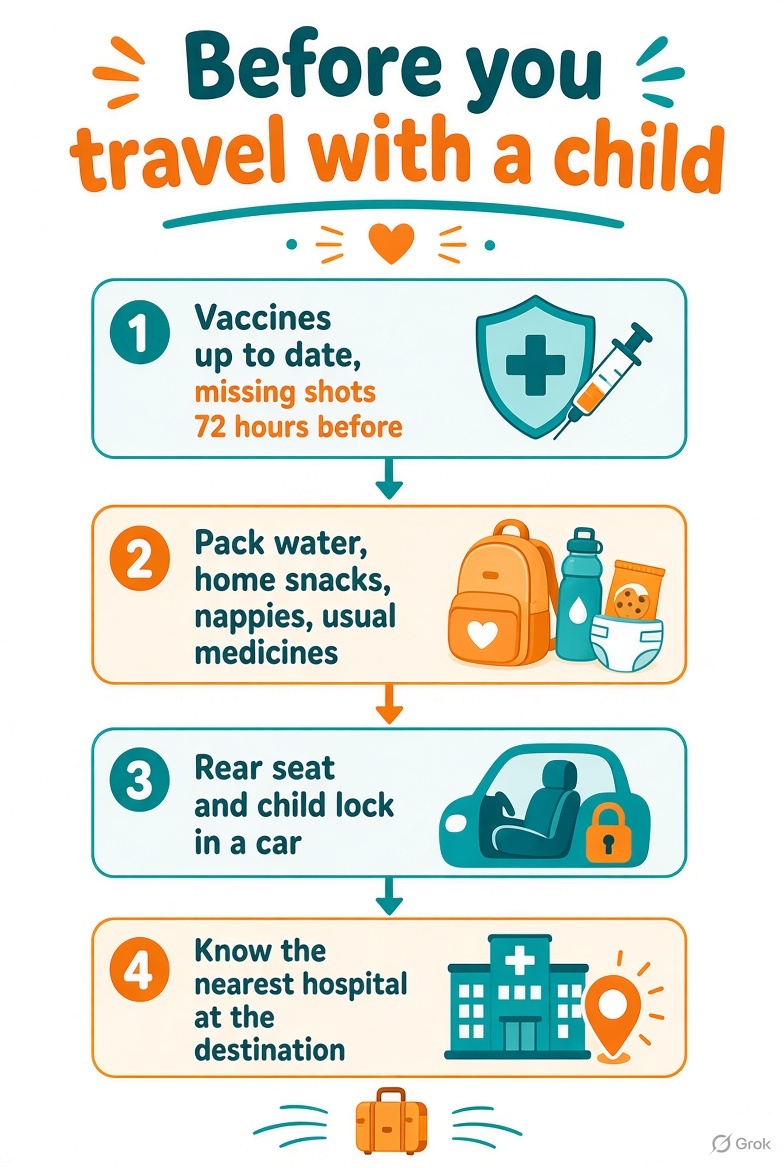
Do this three days before you leave
IAP wants the child’s vaccination schedule up to date. If a shot is missing, they ask you to complete it at least 72 hours before travel — not at the airport gate. Keep the card where you can show it.
Buy family travel insurance while you still have patience. Write down a hospital near the hotel or the relative’s house. Keep the child next to an adult in crowds. Agree, out loud, what you will do if a child is lost: who stays put, who looks, whose phone number the older child knows by heart.
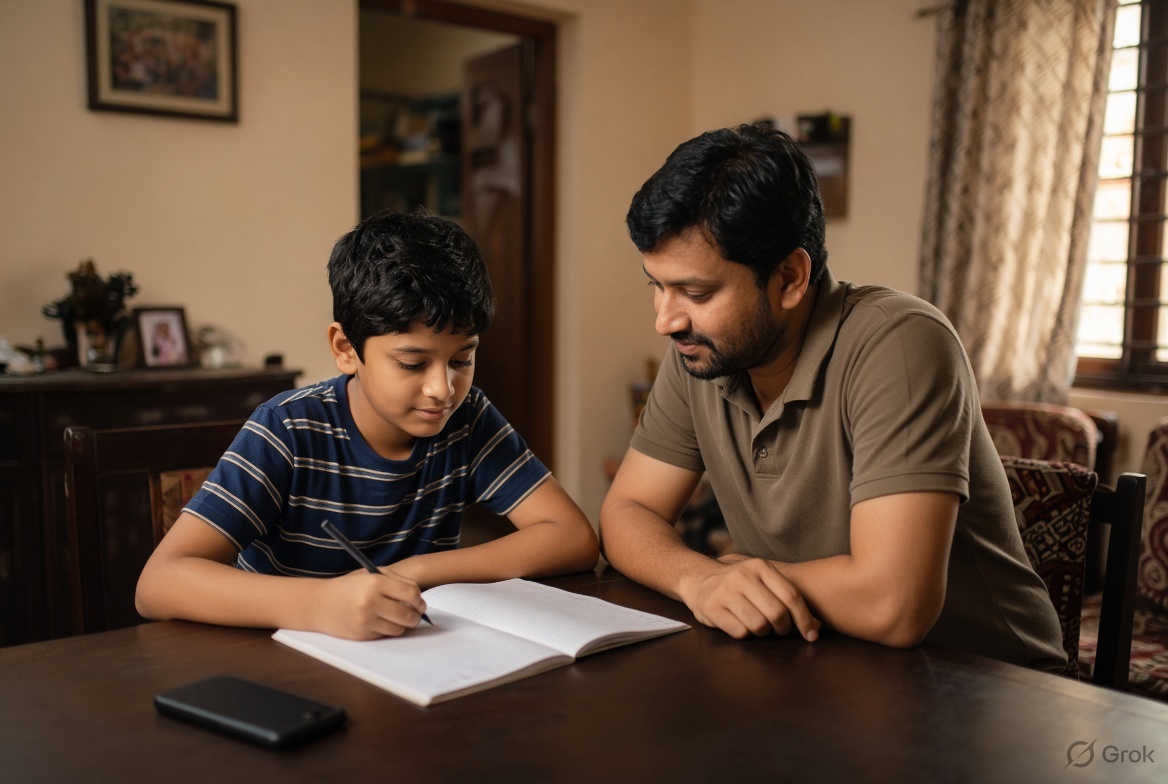
Pre-book the ticket, the bed, the cab from the station. A flexible day is kinder than five monuments before lunch. IAP is clear that too many new things make children irritable. Tell older children the outline of the trip. Let them pack one small bag. A notebook for “what I saw” beats a phone for the whole afternoon. That sits next to screen time guidelines for parents and the play ideas in toys, play and sports for children.
Keep children away from stray or wild animals. Mosquitoes at the destination need a repellent you already use at home, not a new spray tried on the platform.
Pack a kit, not a chemist shop
IAP’s line is simple: an extra bag is better than feeling sorry later. You can also borrow a cot or a stroller at the other end if that keeps the suitcase sane.
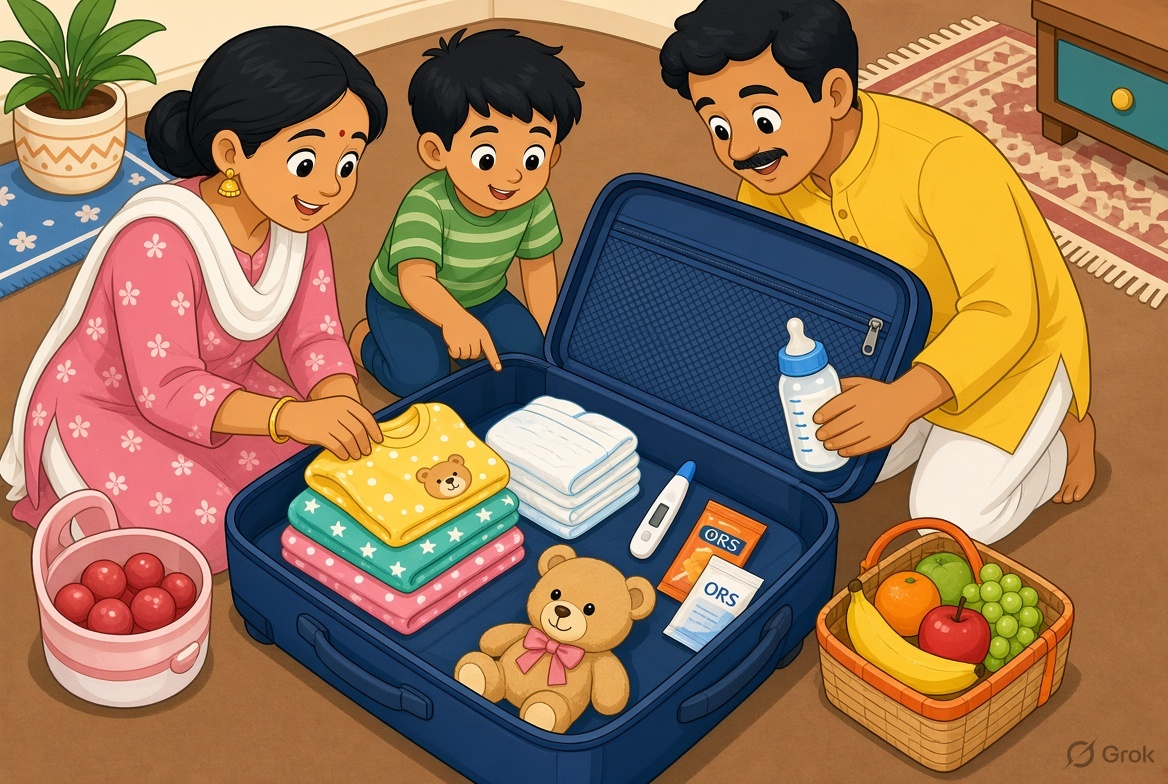
For any age, pack:
- Sealed water you trust, and more than you think - Home snacks the child already eats - Clothes that match the weather, plus one spare set - A working digital thermometer - The fever or pain medicine your paediatrician already named for this child - ORS sachets - A simple antiseptic, bandages, a cream for insect bites - Sunscreen and the insect repellent you use at home - Nappies, wipes and a spare adult T-shirt if there is a babyIf the child already uses an inhaler, a spacer, seizure medicine or a heart medicine, those come in the hand bag — not the hold. Tell the airline when the condition needs extra space or oxygen. IAP also flags extra care for type 1 diabetes on long-zone flights and for sickle cell disease at high altitude.
Do not pack leftover antibiotics “just in case”. Do not pack an anti-diarrhoeal syrup unless a doctor has said so for this child. Loose stools on a trip are first about sips, ORS and a bland familiar food. Blood in the stool is a hospital problem, not a platform problem.
Nappy and clothing habits from home still apply on the road. Cotton, frequent changes, and a few minutes of open air on the skin are in dental care, diapers and clothing for children.
Food and water that will not wreck the holiday
Carry boiled-and-cooled water in a sealed bottle. Skip ice when you do not know the water. Eat food that is steaming hot and freshly cooked. Avoid reheated trays, buffet salads, cut fruit that has sat out, and street food you would not give the child at home. Keep the usual meal times as close as you can. A hungry child is a loud child. Wash hands with soap, or use sanitiser when the tap is a rumour.
That is the same judgement as healthy eating and junk food for children. A roti roll from home travels better than a packet of chips bought in a panic.
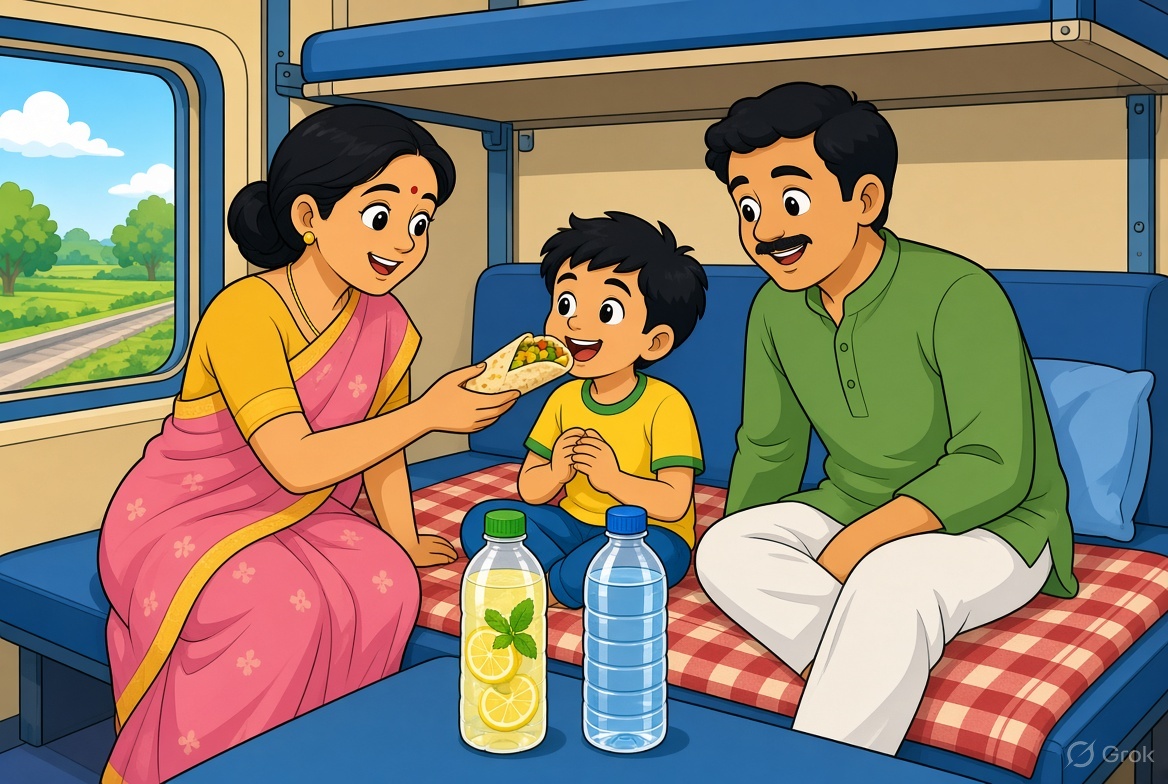
Trains and buses
Local trains and buses get crowded. IAP’s advice is almost physical: keep the child against you, watch bags, and do not let a small child stand near an open door. A train berth is often kinder than a night on a rough road. Carry your own water and tiffin. Use the toilet when it is least busy, then wash or sanitise. Songs, a story and one small toy beat a two-hour cartoon as the only plan — and they leave sleep intact, which is the point of sleep and physical activity for children.
Cars: the rear seat is not optional
The child sits in the rear with the child lock on, in a seat that fits their size, belt on. IAP repeats this for ordinary road trips and for pandemic-era advice: breaks about every two hours, water, a light meal, toys or a story when the child is awake. Never leave a child alone in a closed parked car. Not “for two minutes”. Not with the window cracked.
Drive slower on broken roads. If you can choose between a long bumpy car ride and a train, IAP prefers the train when the connection exists.
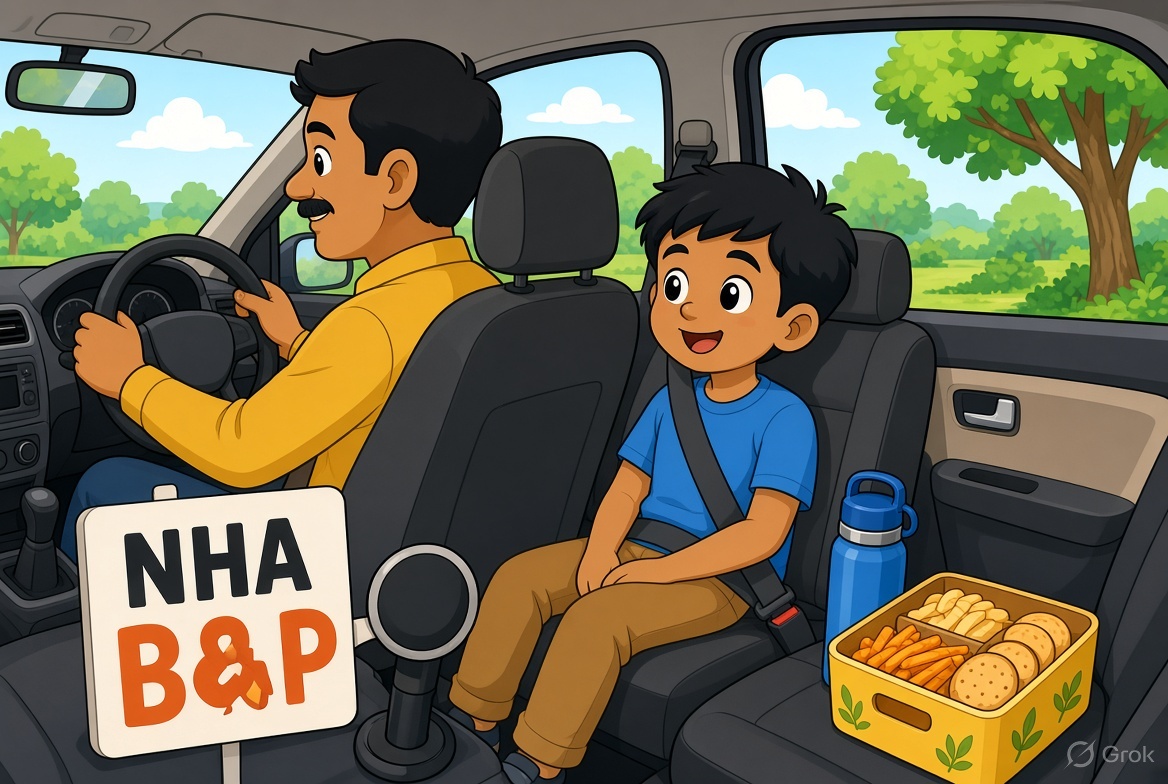
A sleeping baby in a moving car still needs the same safe-hold thinking you use at home. Falls, hot flasks and unlocked doors are covered in how to prevent accidents and injuries in children at home.
Flights with a baby or a small child
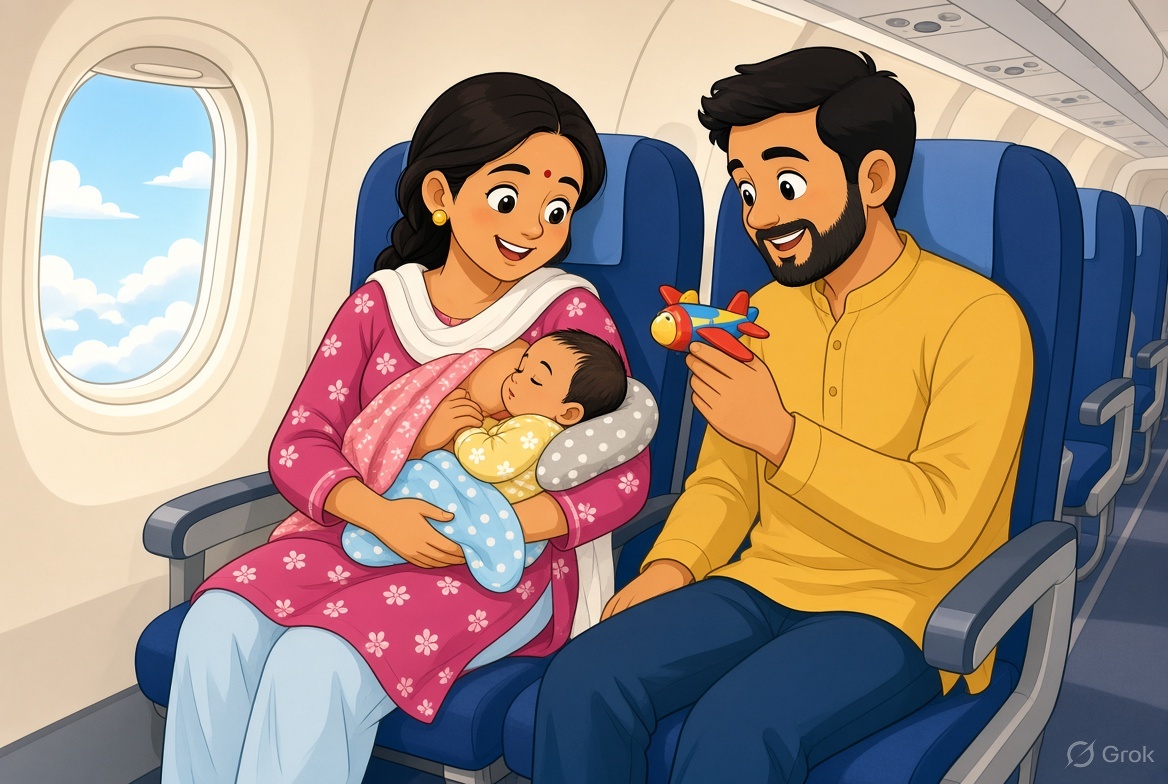
Exclusive breastfeeding till six months still holds in the air. IAP asks you to avoid bottle feeds that have to be mixed in a dirty sink. An aisle seat makes standing, rocking and reaching the lavatory less of a circus. A travel neck pillow and a nursing pillow help. Ask for a bassinet if the airline offers one for infants up to about 18 months. Older children need their own seat and a belt, not a lap for the whole flight.
Feed during take-off and landing if the baby will latch. Swallowing eases the ear pop. For older children, a snack or a chew at those minutes does the same job. Change the nappy on the lavatory table and close the bag in the bin. If the baby cries, try a feed or the pain or colic medicine your doctor already named. You do not owe the cabin an apology for being a parent.
Ask the crew if you need water heated for a feed. Book extra time at security so you are not running with a stroller. Check whether that stroller can go through the gate.
Motion sickness, ears and jet lag
An empty stomach makes motion sickness worse. Looking at the horizon, or a window seat, helps some children. Use only a nausea medicine the paediatrician has already approved for this child. Do not borrow a neighbour’s strip.
On a long-zone flight, some families fly in the child’s usual sleep hours. Others fly by day and aim for a full night at the destination. IAP also mentions shifting sleep a little across the three days before a big time-zone jump, then using morning light at the new place. Keep the first day after landing lighter than the brochure promised.
Children who need extra planning
Crowds scare some children with developmental needs. A rear seat can be calmer. Carry the usual inhaler and spacer for asthma, the usual seizure medicine, and any emergency medicine the child’s own doctor has already taught you to use. Tell the airline early. High mountains and sickle cell disease are a doctor conversation before you book, not after the taxi leaves.
If you are pregnant
IAP’s first line is: avoid travel in pregnancy if you can. If the trip is necessary, many airlines treat flying as acceptable before 36 weeks — confirm with your obstetrician and the airline, not with a group chat. Choose a seat with room to stretch. Walk the aisle every two or three hours on a long flight. On the road, skip the worst ruts, go slower, stop often, and drink. Rail is gentler than a long car night when both options exist. Take only the medicines already prescribed for this pregnancy.
When the child falls ill on the way
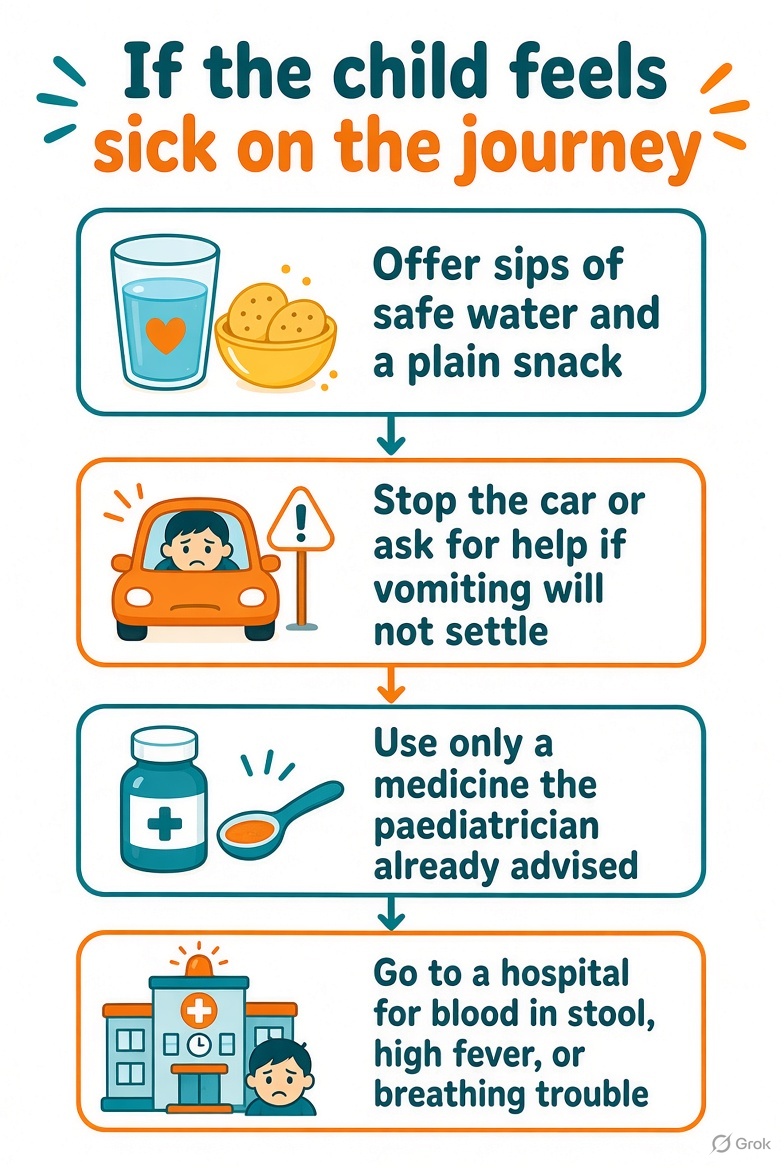
Start with sips of safe water and a plain snack. Stop the car if vomiting will not settle. Use only a medicine already advised for this child. Go to a hospital for blood in the stool, a high fever that is not easing, a child who is hard to wake, or breathing that looks like work. A home visit after you arrive can help a tired fever; a blue child or a burn from a flask still needs the emergency desk. That line is the same as when to call a doctor home, and when to go to hospital.
A last quiet list
- Vaccines done, card packed - Insurance and a hospital name at the destination - Water, home food, nappies, usual medicines - Rear seat, child lock, belt - Breastfeed on the move; skip dirty bottles - One toy, one story, fewer screens - Sleep and meal times as close to home as the journey allows - No child left in a parked carThe trip will still be loud. That is allowed. The aim is that everyone arrives in one piece, with a stomach that still works and a child who still trusts you.