Dental Care, Diapers and Clothing for Children in India
IAP advice on milk teeth, first dentist visit, nappy changes, cotton clothes, and what to skip in an Indian home.
If you have ever wondered whether milk teeth really matter, or whether a nappy all day is “normal”, you are not alone. Most Indian parents hear one thing from elders and another from the internet. This guide follows the Indian Academy of Pediatrics (IAP) parent guideline on dental care, diapers, and clothing — written in the way you would explain it to a neighbour over tea.
The official list of IAP parent notes is on the IAP guidelines for parents page. Sweet drinks and frequent snacks also harm teeth; that sits next to healthy eating and junk food for children.
Why milk teeth are not “just temporary”
Baby teeth stay for about twelve years. They hold space for the permanent teeth, help the child chew and speak, shape the face, and grow the jaw. When they decay early, the child may eat less, sleep poorly, and find school harder. Children who get cavities young often keep getting them later. So yes — those first little teeth are worth looking after.
How a cavity actually starts
Milk teeth have thinner enamel than adult teeth. Bacteria feed on sugar that sits on the tooth — milk, formula, juice, shakes, ice cream, sticky sweets. They make acid. First you may see a white spot. Then a light brown mark. Then a darker hole. The child may wince at cold water or sweets.
A bottle of milk or juice in the cot at night is one of the commonest reasons the upper front teeth rot. Saliva slows down in sleep, so the sugar just sits there. A pacifier dipped in honey or syrup does the same harm.
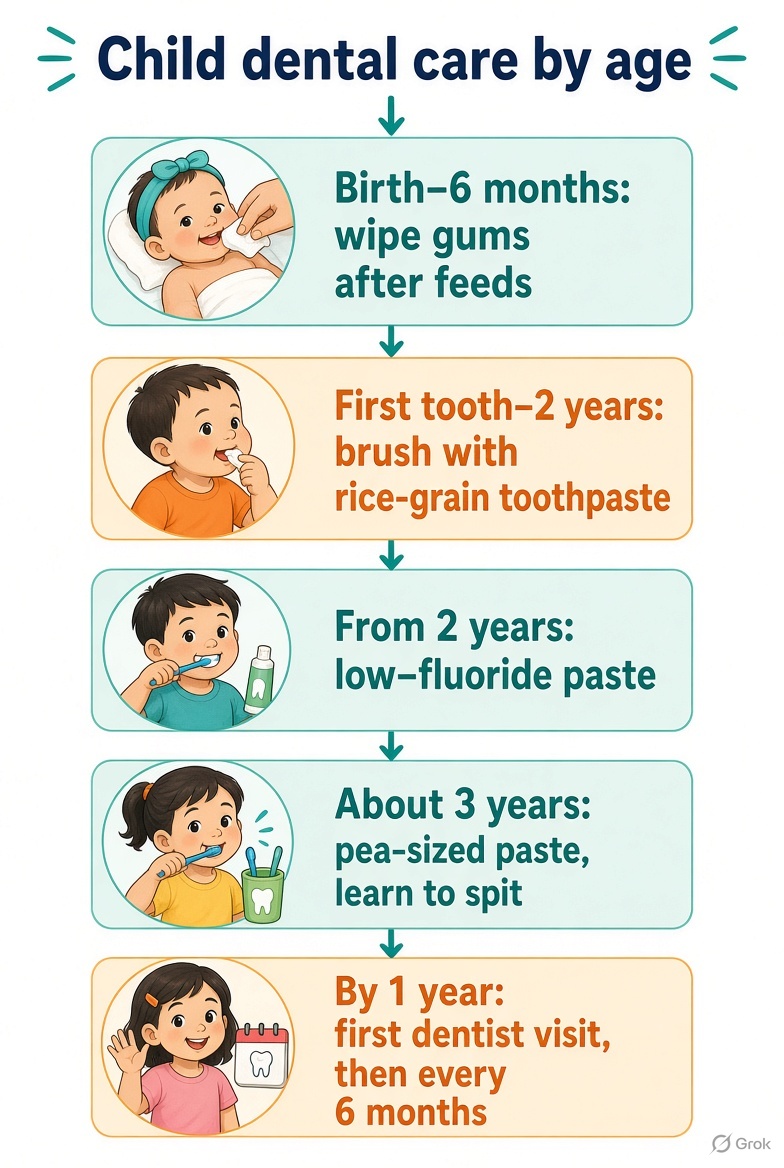
Child dental care by age
IAP’s timeline is simple enough to stick on the fridge.
Pick a small oval head, soft bristles, and a handle the child can grip. Rinse the brush, stand it up to dry, and change it every three to four months or when the bristles splay.
How to brush without a fight
For a toddler or preschooler, sit the child on your lap facing away, or stand behind a taller child. Tilt the head so you can see. Angle the bristles towards the gum. Small circles on the outside, small circles on the inside, then back and forth on the chewing surfaces. Ask the child to spit. Do not rinse with a big gulp if the dentist has asked the fluoride to stay a little longer.
Snacks, juices, and the bottle
Saliva can repair enamel after a meal — but it needs time. Nibbling all afternoon (biscuits, banana, candy, dried fruit, raisins) does not give the mouth that rest. Keep sweets for mealtime. Offer water between meals. Do not put a child to bed with a bottle of milk, formula, or juice. Move towards a cup around the first birthday.
If a medicine is sweet, rinse or brush after the dose.
Thumb sucking after five
Sucking a thumb or a cloth is normal in babies. It comforts them. If the habit is still strong after five, when permanent teeth start coming, the bite can change — teeth may stick out, speech may slur, the roof of the mouth may change shape. A dentist can fit a small appliance if the habit will not fade. Do not shame the child; the habit is not naughtiness.
Fluoride and sealants
Fluoride in tiny daily amounts — toothpaste, some water, some foods — hardens enamel. A dentist may paint a stronger fluoride varnish or gel. You are usually asked not to eat or drink for thirty minutes after that. Sealants are a thin coat on the grooves of back teeth. They do not replace brushing.
Diapers: all day, or not?
IAP says disposable nappies are fine when you are travelling or when night leaks keep everyone awake. At home, light cotton nappies work well. Change every two to three hours, or at once if there is stool. Leave the skin open to air for a few minutes before the next nappy. A plain barrier cream helps. If the rash looks angry or has white patches, see a doctor — that can be a fungal infection, not “just heat”.
Toilet learning in many Indian homes starts without pressure in infancy. Daytime dryness often comes between 18 and 24 months. Night dryness takes longer. Forcing a three- or four-year-old to stay in nappies “for convenience” is not the IAP preference, because damp skin gets infections more easily.
Clothes that suit an Indian climate
- Cotton lets the skin breathe and is kinder in heat and humidity. - Skip extra buttons and dangling bits a baby can pull off and swallow. - Front-opening vests are easier than pulling fabric over a wobbly neck. - Wash new clothes before the first wear. Wash nappies separately. Use a mild, dye-free soap. Dry in sun when you can. - A healthy term newborn does not need a cap indoors. Cover the head when you step out if the air is cold. - Skip mittens. Short nails and prompt feeds stop most scratches. Mittens hide feeding cues and get in the way of skin-to-skin. - Swaddle only for sleep, never all day. Keep two fingers of space at the chest. Legs should be able to bend at the hip. Tight wrapping plus a roll onto the tummy is dangerous. - In fever, use light cotton. Extra blankets trap heat.Tight jeans in a teenager can rub the inner thighs raw and encourage fungal rashes. Very tight innerwear is also a problem. Looser cotton for home and play is kinder.
When to see a dentist or a doctor
Book a dentist if you see white spots, brown marks, a hole, swelling of the gum, or a child who will not chew on one side. See a doctor for a nappy rash that is not settling, a feverish baby who feels too hot under layers, or a child who swallowed a button or a detached decoration. A knocked-out or broken tooth after a fall needs urgent dental or hospital care — do not wait for morning.