Screen Time Guidelines for Parents in India
IAP screen limits by age, family media rules, social media ages, and what to do if a child cannot log off.
The phone is in the room, the TV is on for company, and a small child has already learned to swipe. None of this makes you a careless parent. It makes you a parent in India in this decade. The Indian Academy of Pediatrics (IAP) screen-time guideline is useful because it gives ages, not slogans.
The source list is on the IAP guidelines for parents page. Screens also steal sleep; that pairs with how much sleep and play a child needs.
What counts as screen time
IAP counts the whole day on phones, TV, computers, tablets and any handheld screen. Schoolwork, a video call with grandparents, or making music can be useful. Endless reels, violent games and unsafe sites are not.
Limits by age
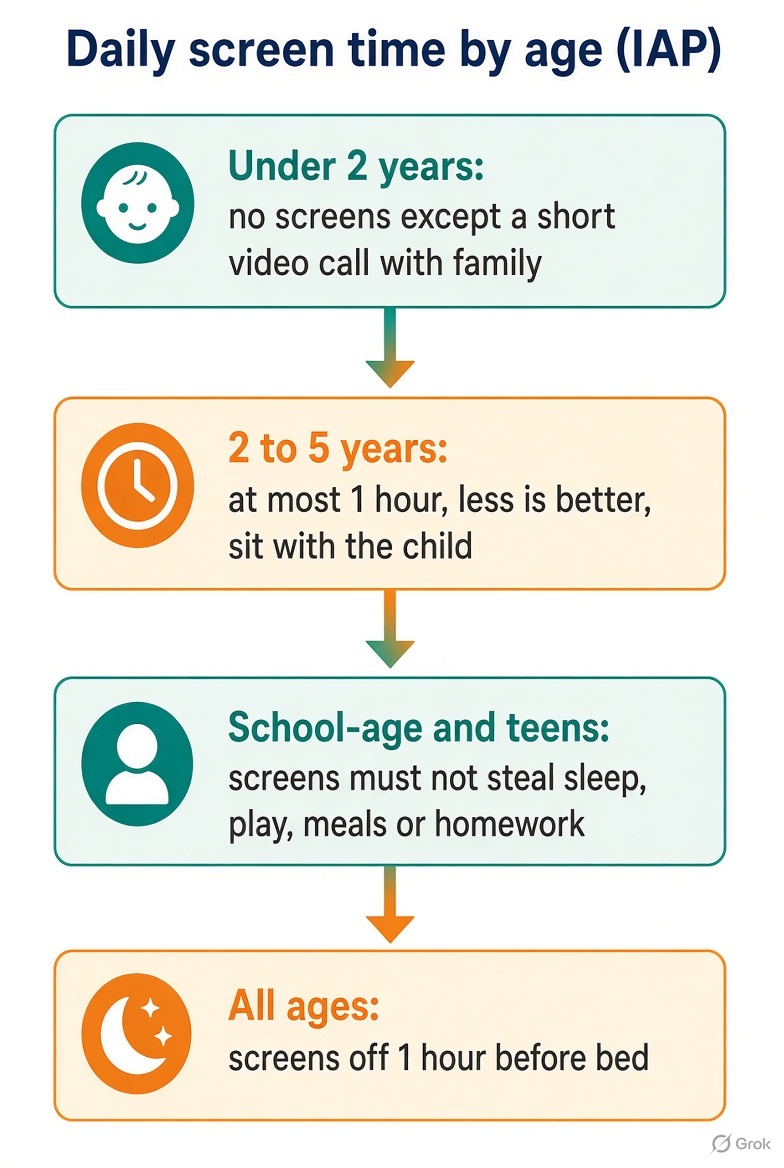
- Under 2 years: no screens, except an occasional video call with family. - 2 to 5 years: at most one hour a day, and less is better. Sit with the child. Choose calm, age-right programmes. - School-age children and teenagers: there is no free pass. Screens should not push out one hour of real play, enough sleep (about eight to nine hours for many adolescents), meals, homework, hobbies or talking at home.Switch devices off a full hour before bed. Blue light makes it harder to fall asleep.
What too much screen time does
Bodies get heavier and stiffer. Eyes ache. Necks and wrists complain. Sleep breaks. Speech can lag in the early years. Some children become more restless or aggressive. School marks dip. Online, a child can meet bullying, a distorted idea of sex, or a feeling of being left out. A few children slide into real addiction — they cannot stop, they crave the next session, they explode when you take the phone, and grades or friendships start to go.
House rules that actually stick
Write a short family media plan and put it on the fridge. Decide which apps are allowed, how long, and where. Bedrooms and the dining table work well as phone-free zones. Use a big screen in a common room for school classes. Co-watch with younger children. Turn on safe search and privacy settings. Do not let homework sit next to a second device that is “just for songs”.
The 20-20-20 eye rest is simple: every 20 minutes, look 20 feet away for 20 seconds. Sit with a straight back. Parents set the tone. A child will not believe a “no phone at dinner” rule if the adults are scrolling.
Games and social media ages IAP lists
Violent multiplayer games are a poor daily diet. IAP notes age gates that platforms themselves use — many social apps from about 13, WhatsApp from 16 in their list, YouTube from 18 or 13–18 with permission. Younger children are not ready to weigh risk. Even when an account is allowed, talk about passwords, pictures, meeting “friends” from the internet (never alone), and what to do with a nasty message: do not reply, save it, block, tell you, and if needed report on cybercrime.gov.in or call Childline 1098.
If you cannot get the phone back
Start with sleep, play and meals — put those back first. Then shrink the hours. If the child becomes violent when the device goes, or school has already collapsed, see a paediatrician or a mental health professional. IAP treats that as a health problem, not a character flaw.