Choosing a School for Your Child in India: What Parents Should Check
IAP advice on commute, medium of instruction, school-bag weight, tiffin and homework so school does not swallow childhood.
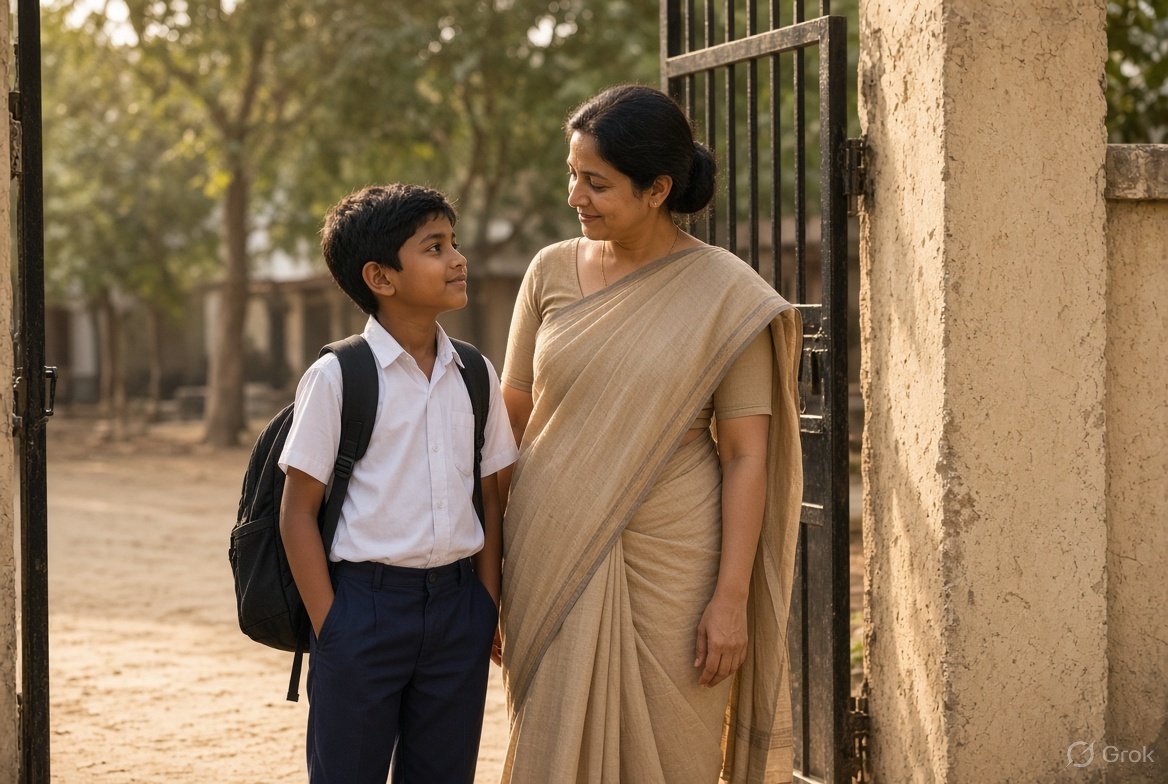
School hunting in India often starts with a board name and ends with a tired child in a van. The Indian Academy of Pediatrics (IAP) school guideline asks a quieter set of questions: how far, how heavy, what is in the tiffin, and whether the child still has a childhood after the last bell.
The official parent pages live on the IAP guidelines for parents site. Bag weight and homework only work if the child also sleeps and plays; see sleep and physical activity for children.
Start with the commute, not the brochure
Distance and the ride matter as much as the brand. A two-hour van each way steals sleep, breakfast and play.
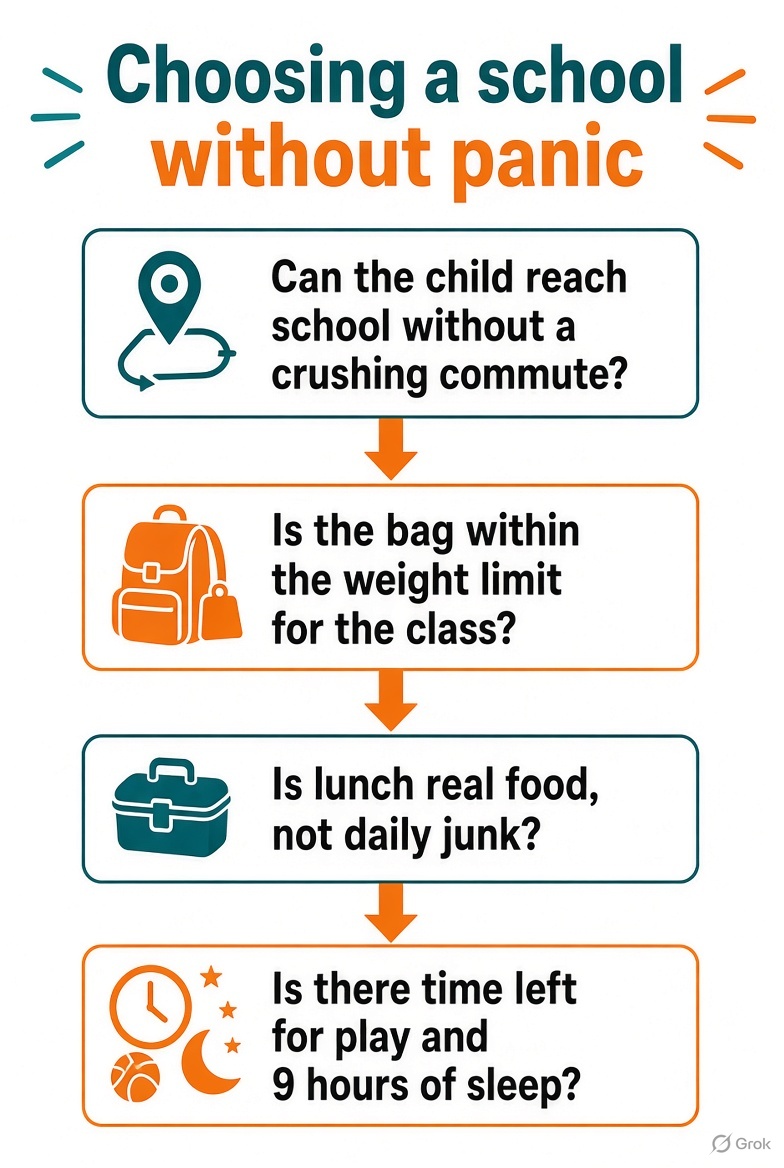
IAP asks you to look at how the child will actually travel, every working day, not only on admission day.
Language and when to start
Children learn fastest in the language they already dream in. English can start as a subject early, but IAP warns against loading a child who is already struggling. Informal learning and friends after the age of three help the brain. Formal school sits more comfortably from four years onward. A two-year-old needs play, talk, songs and stories — not a timetable of “portions”.
How heavy should the bag be
IAP repeats class-wise ceilings that many Indian schools still ignore:
- Classes 1–2: about 1.5 kg or less - Classes 3–5: about 2–3 kg - Classes 6–7: about 4 kg - Classes 8–9: about 4.5 kg - Class 10: about 5 kgAnother simple check used in their note: the bag should not be more than about 10% of the child’s body weight. Weigh the bag on a kitchen scale on an ordinary Tuesday. If it fails, talk to the class teacher about workbooks that can stay in school.
What goes in the tiffin
Cereal, dal, a vegetable or fruit, something the child can actually finish in twenty minutes — roti roll, idli, upma, chilla, a sandwich. Cheese, egg or nuts add staying power when the family eats them. Daily noodles, pizza and cola in the canteen are still junk food. Mid-day meals should be fresh, clean and close to what the child already knows at home. That is the same idea as healthy eating and junk food for children.
Online class hours if school is on a screen
IAP’s upper limits for online days: one session for pre-primary, two for classes 1–5, three for 6–8, four for 9–12, with each session about 30 minutes in the early years and 30–45 minutes later. That is a ceiling, not a target.
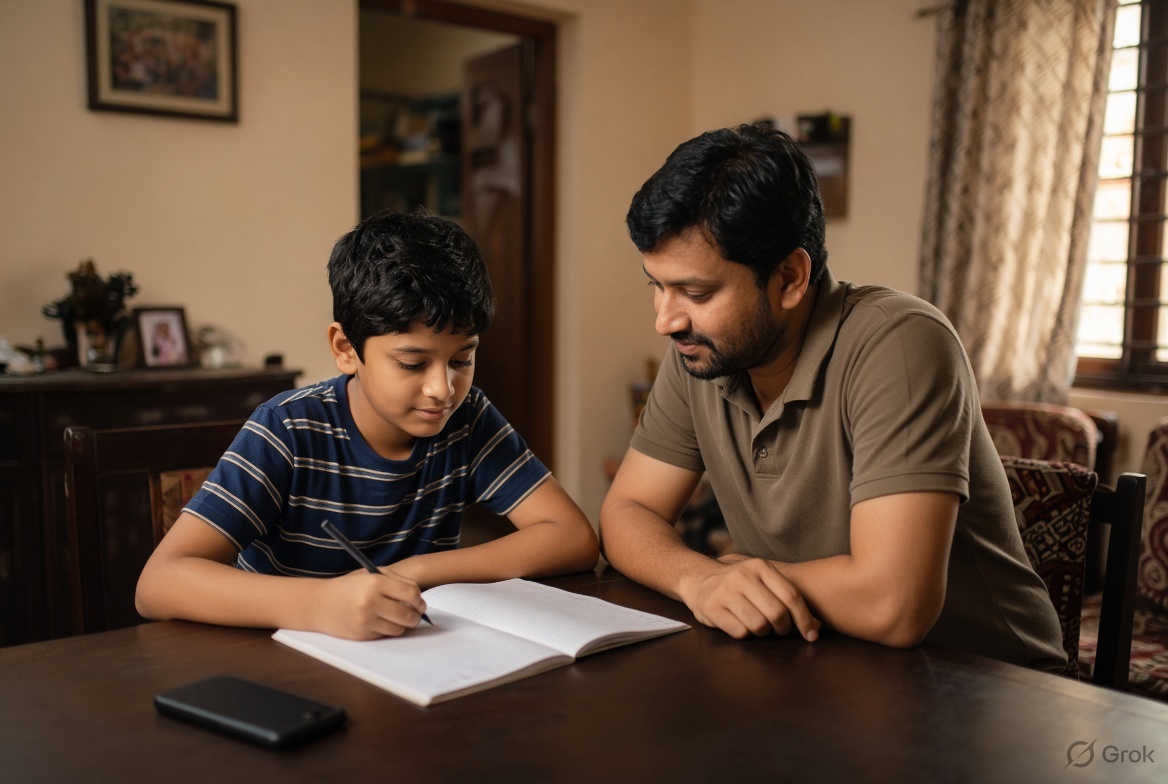
Homework that leaves a life after school
About half an hour in primary, one hour in middle school, two hours in high school. Activity beats copying. A quiet corner, a short list, a break every 30–50 minutes, and no second screen “for company”. Praise the work you can see. Marks-only pressure makes children hide.